
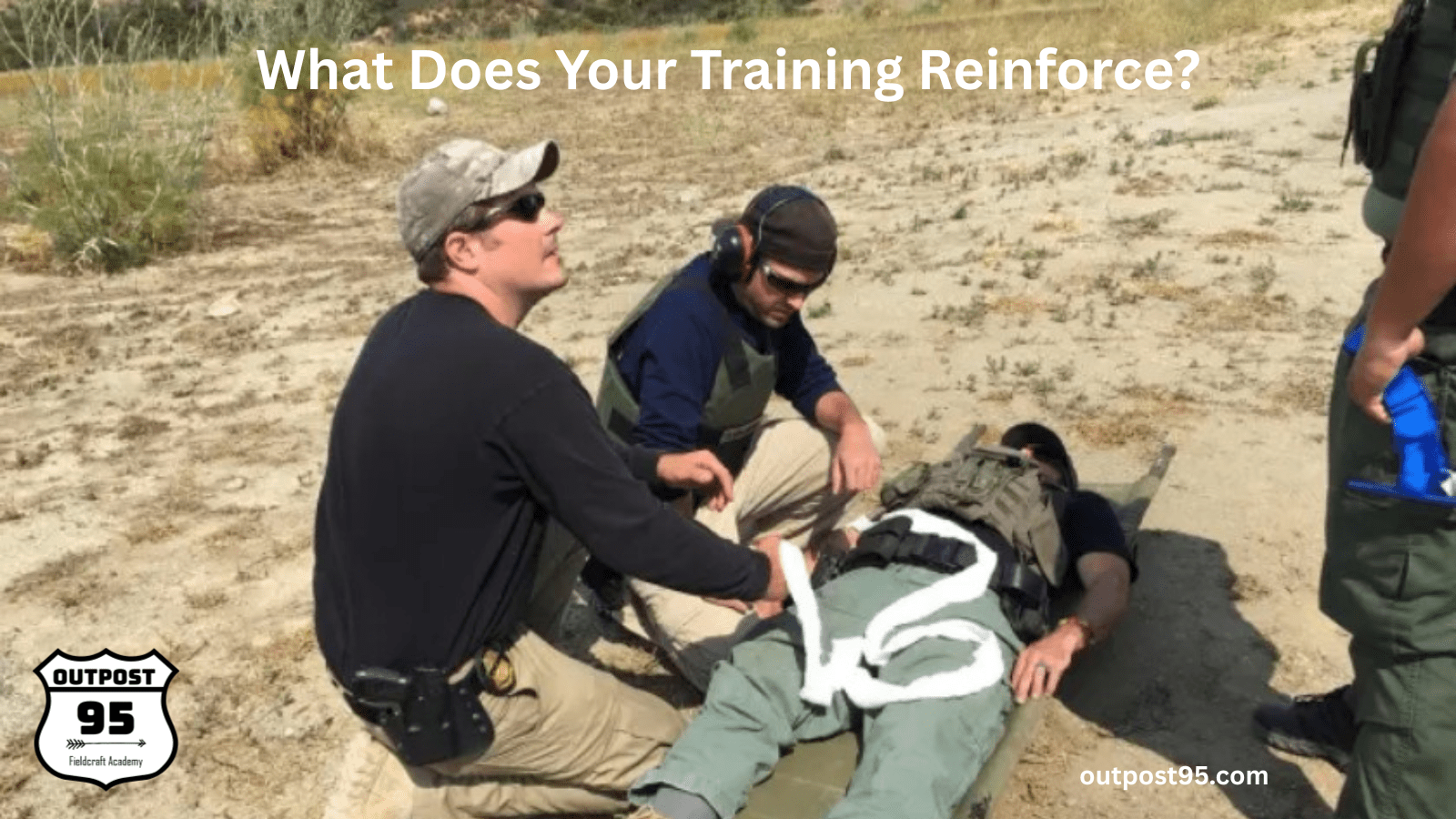
Can training ever be a bad thing? Unfortunately, there are a few instances when training can be detrimental, though it is rarely talked about.
Training is when an action is practiced repeatedly. If the training is continued long enough the techniques are ingrained as second nature. Training scars happen when unwanted behavior is reinforced. It is often repeated that practice makes perfect; this is wrong, as only perfect practice makes perfect. Imperfect practice produces a training scar.
A good instructor will think about the final product they are trying to produce. This includes thought processes, actions, priorities, etc. They then work backwards and develop a program that reinforces the desired produce. Proper teaching or coaching is its own skill, and mastery of a subject doesn’t mean a person can teach it. If you teach a subject long enough and if you track how students use their training, issues inevitably will arise. Either by a gap in the instruction, the improper emphasis is placed in certain areas, technique based on incorrect theory, or the technique is simply not applicable to the environment it is being used in. When these issues are discovered the block of instruction or program needs to change.
Training scars tend to develop more in areas where the instructor only has theory regarding the subject and not real-life experience. Similarly, if the action is infrequently performed the odds for the instructor to supplement knowledge gaps with theory exist. Sometimes we don’t know what we don’t. Like it or not every instructor has to teach on theory at some point, because no work experience covers every single situation. Hopefully you have an instructor that has successfully done most of the things they talk about.
Another major cause of training scars in “Institutional Inbreeding”. This occurs when the instructional group and the working group become a closed loop system. The students only work in the organization and instructors only come from the organization. The groups that suffer the most usually had previously reached high levels of competency. They then spend more time congratulating themselves at being awesome than they do at maintaining this level of competency. The job changes slightly and the mission focus shifts. As they have very little outside influence, few people are able to point out where they are falling behind or even failing. As these groups had previously developed an expert level status on the subject, everyone outside of the organization still assumes this to be true and will treat them as the experts. If this happens long enough the organization will treat any attempt to help them as an insult and resist any recommendations. If you find yourself in this situation, the best advice I have heard was to set up scenarios that illustrate the failure, so the group seeks improvement. Versus you telling them they need to improve in an area. They need to think the idea is theirs or they resist it.
The list of potential issues could be quite long, here are a few I have seen in the military, law enforcement, and medical drills.
- Fight through, don’t “die” in training. If you participate in things like airsoft, if you are struck with a BB, you are dead and out. Great for the rules of that game, but in real life if you become accustomed to “dying” once you are struck you will give up when you are injured.
- Shouting “self-aid” and carrying on. To alleviate the dying in training issue, one team I trained with shouted “self-aid”, patted the injured area, then continued as if there wasn’t an issue. While better than giving up and doing nothing. The issue arises when this individual gets hurt and needs to render self-aid, they aren’t prepared to address the issue. And the team isn’t as prepared to work through the problem with a wounded team member because they never practice addressing it.
- Not spending enough time to complete a task. If there is a technical problem that needs to be worked through, it is often verbalized to maximize the training time. This makes sense, but if they never go back and work through the problem, when it takes 15 minutes to complete instead of the 15 seconds to describe, they run the risk of not preparing for the issues the time delay causes. Make sure you run through the whole problem a few times to try and discover if any issues arise.
- What’s next? Commonly when a training scenario is done it covers a specific scenario, and this is drilled until perfect. Does the person know what to do next? Do they call for help? Arrest the bad guy, carry the wounded person to a vehicle? Extend your training from time to time or at least verbalize the next best step to the problem. After a person is in a use of force encounter and they aren’t training on the follow up procedures. Somethings they then freeze up because thinking about what is next wasn’t practiced.
- It is not real cover, but it stops a sim/airsoft projectile. If you are using an airsoft or Simunition training gun. Then you need to train as if it were real. Would this thing I am using for cover stop a bullet? If I am shooting you through the window and the glass stops it. Does the role player recognize they have been properly engaged?
- Role players are going off on a tangent. In professional level training, one of the most important things that you can have is a role player that sticks to the program and helps the student reach the learning objective. It is common to get a role player who doesn’t want to lose or wants to show the world that they are the best. So, they go off on a tangent. This can be bad. The students often begin to think that everything is unwinnable and that trying is pointless. Or that the rules, technique, etc. are all pointless. Everything you are teaching will be resisted by the students if this is allowed to continue. The training should be constructed so it is winnable. If the students don’t win, then you need to try them more or more effectively. (NOTE: stress academies and stress inoculation are important as well. There are a times and places for those. Continuing through seemly unwinnable scenarios is very important to developing a warrior spirit and has its place. However, if it is during a class on techniques, it will not reinforce the skills that you are trying to teach.)
- Unload and holster. After a few competition shooters got into lethal shootings, they discovered that they were immediately unloading their service pistols and holstering back up. After shootings in competitions, they were required to show clear. It naturally carried over in a use of force situations. Very bad in real life, as there they might still need to shoot someone else. So, if you are forced to do something because of range rules, you cannot allow this to become a muscle memory function. It must be a conscious choice every single time. So, if you still need bullets in your gun, you have them.
This is by no means an all-inclusive list. These are just the first ones that popped into my head. When you design your training, you need to think about the implications of each thing that is taught and reinforced. Whether intentional or not. When someone goes and does the thing that think you have been training them on, debrief them and find out what went well and what was an issue. Your program should constantly be improving and tweaking based on the end-result it produces. Hopefully you have developed a good enough relationship with your students so that they continue to give you honest and useful feedback.
So how do you prevent training scars? Component instructors with real experience are a good start. Even if you have that you need to get outside people who already have the knowledge base and experience to attend your training. Where they can evaluate your program from time to time. The people who are heavily invested in the programs will likely push back at anything short of positive reviews. Remove these people from power to prevent institutional inbreeding.
Get out there and seek improvement no matter what your craft is!
-Joseph

