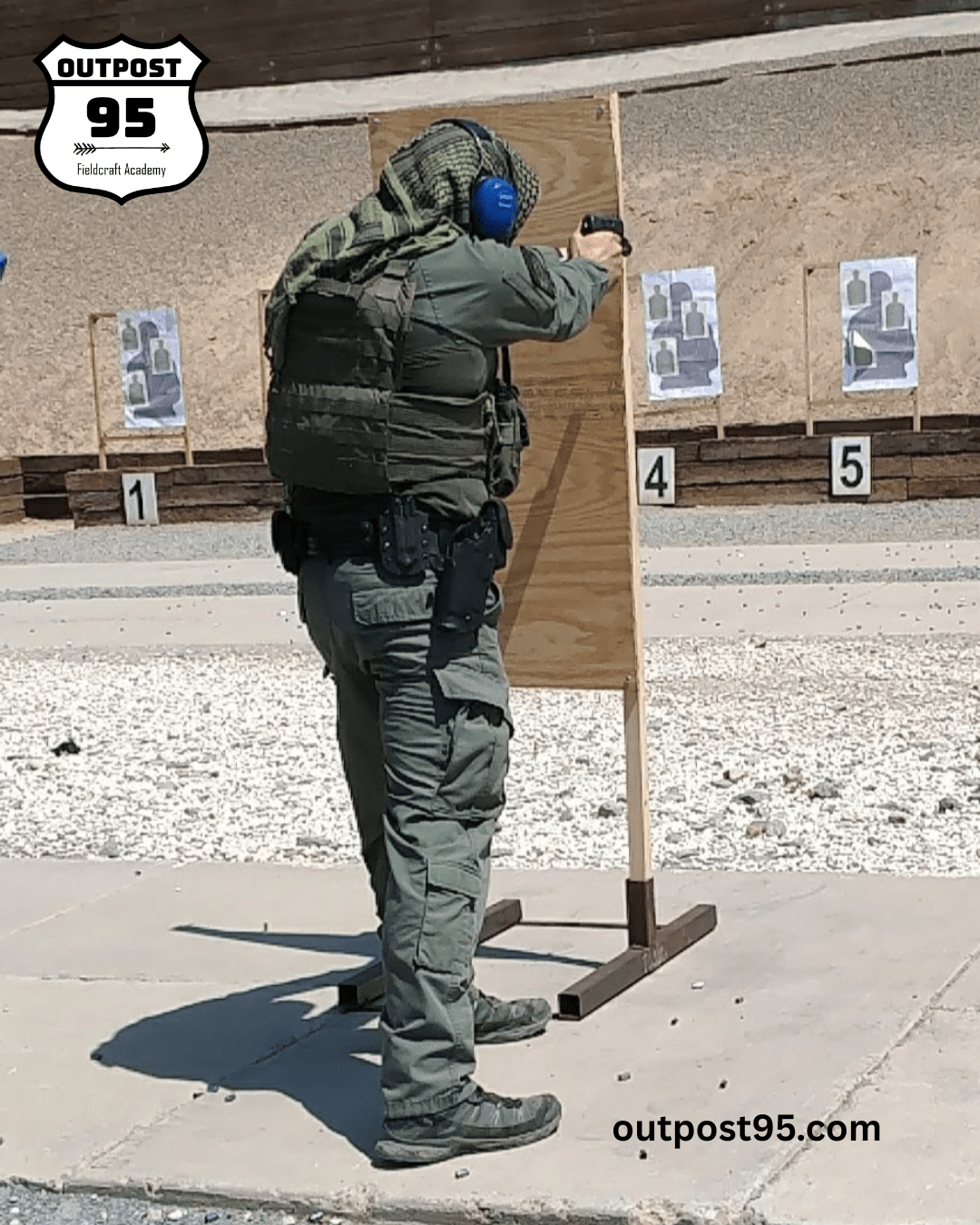
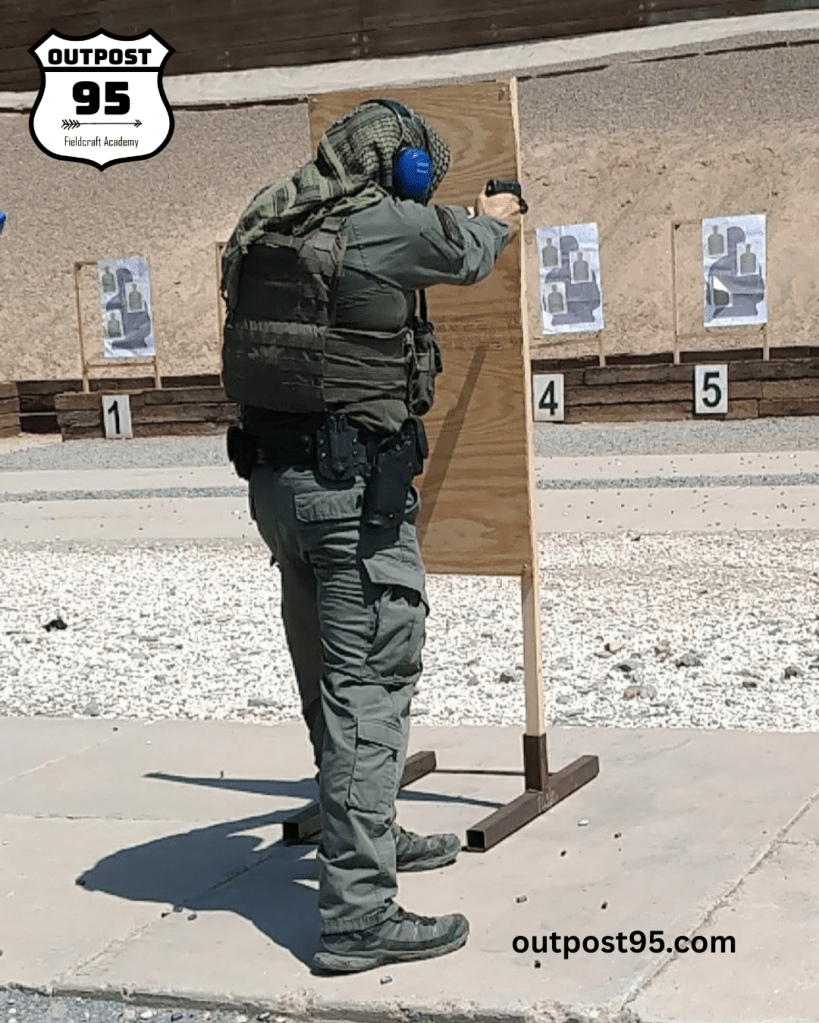
Within the training circles you will find people talking about the flat range. Which in firearms training world is simply a standard gun range.
I’m not certain where the complaints against the flat range originated. I would guess a gun influencer or one of the shooting schools. If not that community popularized it to the point it is thrown around like a derogatory term.
Looking at the negative first, there are some real negatives from only training on a sterile range with highly restrictive rules.
- Limiting training is performed due to excessive safety restrictions. Restrictions on movement, changing positions, and rate of fire.
- Shooting a firearms qualification and then calling it training. A qualification is a pure and simple test, if you only ever take a test, you are never training. This is common in the law enforcement world. Most cops can’t shoot because of lack of training.
- Focusing on a set of unrealistic shooting style and expecting it to carry over into a different world without verifying it. Taking an average deer hunter who only shoots their rifle from a bench rest and only hunts by shooting from an offhand position.
Rangisms – negative behaviors that training, on the range specifically, has induced. There have been incidents of cops getting into a shooting, who immediately unloading and showing their pistol clear. Doing this because they always immediately unload and show clear on training days or during competitions. His training could have had a very negative impact on his ability to live. Not moving to cover is another rangism. Safety rules prevent movement and it can be hard to train back into people later. We could go on for days about all the rangisms and maybe it should be written down, but hopefully you get the idea here.
What the “flat range” is a place to master the basics of shooting. To make techniques that are perfect under perfect conditions. Building muscle memory, while honing your technique, accuracy, and speed. This is called Primary or Basic Marksmanship Instructor. It might be basic, but it is very important if you ever want to go to intermediate or master level. I had a Sergeant who constantly said, “The best do the basics better.”
The other side of the training is field shooting and force on force training. This is where you take the mastered basics and apply them to a realistic, or a more realistic, shooting situation.
- Field shooting is using the firearm in the imperfect conditions, terrain, and obstacles the real world. Testing the limits of skill and technique.
- Could you take the one MOA rifle and hit a four-inch clay pigeon set on a cow pie 75 yards away across a pasture? It should be a simple test; the rifle is more than capable.
- Can this same one MOA rifle hit a whitetail deer walking through the timber, with limited shooting holes at 30 yards? Before the deer walks out of range. The rifle is capable. If I never practiced shooting quickly from a seated position next to a tree at an animal walking along a path, then this might be a very difficult shot to attempt.
- How about you chasing a guy in a foot pursuit, now you are tired and the force-on-force scenario changes and you now need to deploy your firearm? Can you use it tired, in a dynamic situation?
- In the military, law enforcement, or hunting worlds, adding 20 to 120 pounds of equipment changes things rapidly. Can you even perform the basic shooting tasks with the stuff you have in the places you have it? Can you now move yourself a short (or long) distance and repeat the task without getting winded from the weight? How about after doing that all day long?
Force on force training is some awesome stuff, after you have the basics masters. It is the best chance you have to use all of your skills together in a learning environment, you will likely make mistakes and you call learn from them here before you find yourself in a deadly and dangerous encounter.
Force on force training also has the advantage of reducing the likelihood of developing PTSD. As it has been shown that realistic training is one of the best preventions for PTSD. Just take care that the training is designed to build and reinforce good training habits and not poor ones. Overzealous role players will ruin a scenario and cause more harm than good and must be removed immediately.
All three training venues have an important place. If you are serious about building skills, then you should look at adding all three in their proper context to your training regimen.
-Joseph

