Ezekiel 38:7 Be thou prepared, and prepare for thyself, thou, and all thy company that are assembled unto thee, and be thou a guard unto them.
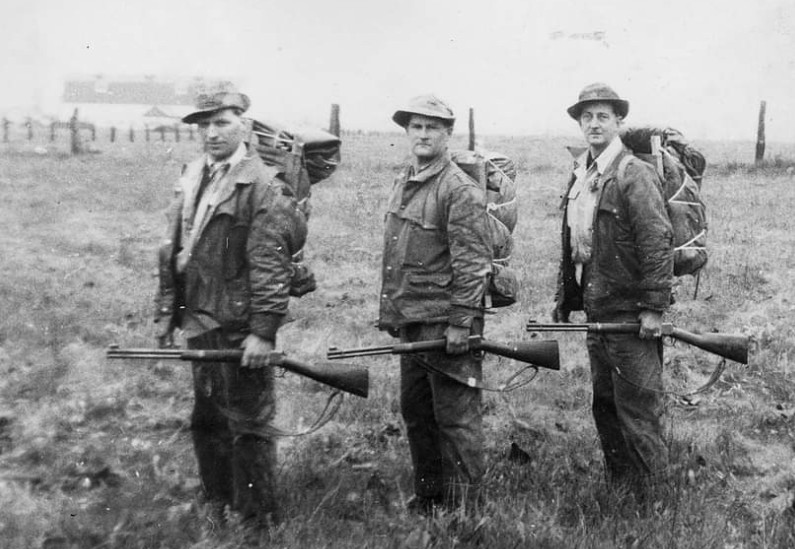
Let’s take a closer look at the Pacific Coast Militia Rangers (PCMR), and what if was they were tasked with accomplishing. Then break those tasks down into the skill sets they would need to perform those tasks.
- Patrol their local area.
- Report suspicous activities observed.
- Serve as guides to regular military units.
- If invaded to fight as guerillas.
To patrol their local area, a most basic function. These were individuals accustomed to be out in the local areas: loggers, trappers, and fishers. Spending as much time out and about as they did, they would have a very good working knowledge of the areas they frequented.
Functioning as Rangers they would have to go out to cover their assigned district in some organized fashion to completely cover the area. Some of the basic skills they would need to patrol are:
- Patrolling Techniques
- Land Navigation
- Movement Techniques
- Observation
- Tracking
- Behavioral Profiling
- Camouflage
- Reconnaissance Techniques
The ability report suspicious behavior. We have a few thing going on here. First we need to know the area and its inhabitants well enough to know what suspicious is. For instance, in Iraq they would have weddings on Thursday nights and shoot their rifles in the air afterwards. The first time you hear this you think something is happening; however, once you understood the local customs a previously suspicious activity is now a normal one.
After you have identified the suspicious behavior you will need to need a way to relay this information in a useful, concise manner, to another party.
- Knowledge of local customs and activities.
- A reporting system.
- Means of making: rapid, reliable, secure communication.
- Knowing who to send it to.
The ability to guide regular military units. This seems simply enough, if you can actually be helpful.
- The ability to physically keep up with the full time military unit.
- Having enough knowledge to actually be a subject matter expert of the area.
- Having experience working with them previously, so as to join them seamlessly.
If invaded, to fight as a guerilla. This was likely the draw that recruited many applicants to the PCMR. They had many men interested in joining their cause that were otherwise barred from active military service: too young, too old, and being employed in a vital war time occupation were common reasons. Never the less they felt a strong sense of urgency with the war raging in the Pacific and the desire to keep their families and community safe. They were tasked different than a line infantry soldier or marine would have been, with the lack of support being a big difference.
- Small Unit Tactics
- Working Unsupported
- Rifleman Skills
- Coordinating with other similar units.
There are quite a few different skills here to discuss. A thing to consider is how much self-reliance these men needed to have, but it was also common place to their lives already.
As the country enters this new cold war where pre-conflict activities are occurring in the Pacific on a daily basis. An in-depth study of the PCMR seems to be more relevant than anytime in the recent past. Like everything else here at the Outpost we are going to breakdown the skills needed and try go through them in more detail.
This new series will be called Home Guard – Scouts & Hunters. Not that the Rangers were a bad or inappropriate name, as it is. However in the United State the Rangers are an elite Army unit and I’m picking another term out of respect. We’ll be focusing on the Home Guard principals, but specifically the very small teams searching out what is happening around them, i.e. scouting and the traditional skills of the frontier and rural America, i.e. hunting. Keeping the ultimate focus on protecting the community in worst case scenario, a scenario that is playing out right now in multiple places of the world.
-Joe
 Outpost 95
Hi Joe, I’m Looking forward to reading more. The Task Skills listed, looks like an outline for future training. Thanks and I will see you on 12 NOV, Mike
LikeLike
Fascinating! I am looking forward to more knowledge on this. Thanks Joe!
LikeLike