

When I was younger, I had a 12 gauge shotgun. This shotgun covered almost all of my hunting needs at the time, from killing gophers to deer, birds to coyotes. I remembered thinking that it was interesting that people wanted multiple rifles to cover a similar amount of game animals. I later learned about Jeff Cooper and his Scout Rifle concept, one that I was very intrigued about. After all, why can’t you use one rifle to cover most of your basis? You can, and not that long ago, most people did.
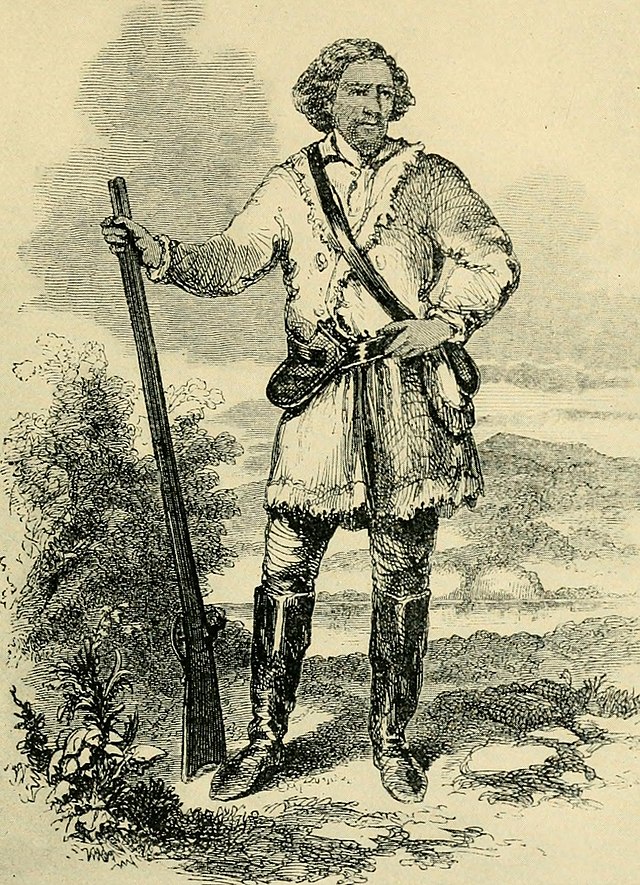
What was Jeff Cooper taking about with a scout rifle? It seems he was drawing Fredrick Russell Burnham as an inspiration (similar to what I have drawn on for the scout concept myself). Burnham was a scout most of his life, working for the smugglers, the US army, as the Chief Scout for Rhodesia, and working for himself. During his time in Africa he taught Badan-Powell scouting (founder of the boy scouts). He mined and prospected across North America and Africa. He supplied meat to camps, and ran messages for a smuggler as varying occupations. He used a rifle throughout his working life, almost always as an individual or a part of a small group. It is this type of person Cooper was designing a rifle for. An individual who carried a rifle a lot, who would press it into many different roles from civil to martial where it would be expected to get the job done with little fuss.
The Coopers scout rifle concept was centered around a short barreled 308 bolt action rifle. With a person such as Burnham in mind. His criteria was stringent, with the devotees of the concept abrasive to those who don’t follow the criteria as closely. Which brought the idea of a “Practical Rifle” about. A Practical Rifle has basically the same definition, except you can be more flexible with length, weight, and things like that. It is essentially the spirit of the Scout Rifle Concept, allowing for small deviations from the approved criteria.
Now lets fast forward to today. Realizing there isn’t as much of need for a scout in the Burnham sense, there are still factors that make the one rifle solution make sense. First meat prices are climbing, and many commercial operations are putting things in livestock that I don’t want to feed my family, so hunting is a must do to keep us in meat. Also, in a martial sense, it seems the current potential for WWIII is higher than ever. I’ve been talking about the Home Guard concept for a while now and the very real likelihood that America has been invaded by cells from a foreign military through the open borders. If true, this could mean Home Guard or civil defense type units might become a necessity.
Recent trends also find there are a lot of people who shoot who don’t hunt. This isn’t an issue at all. It is just a different paradigm than I grew up with and merits thinking about. People have much less disposable income to spend on shooting and having one or more firearm for each game animal, plus self-defense, plus a farm gun, plus a truck gun, etc. is too difficult for most to afford Another factor is, there seems to be a push in people returning to a rural life, these folks seem to be less interested in the recreational aspects of shooting and are more focused on the utilitarian factors of their tools, i.e. they are focused on their guns being practical. So, while the criteria has changed, the concept remains valid.
I equate a practical rifle to a half ton pickup truck. A half ton really isn’t good at anyone thing. It is too much vehicle to be a reasonable commuter car for work, too light to be a dedicated towing vehicle, and not properly set up to be an off-road vehicle. However, a half ton truck will do all of those things at an acceptable level. It’s practical. It does everything I need it to do, and if I were to get a perfect vehicle for each task, it would become unreasonable to manage. So, I am applying this same mindset to a different tool.
So what does a general purpose rifle need to be able to do? It is probably going to look like one of two options depending on whether you hunt or not, but like a 1/2 ton pickup they will do everything to a satisfactory level as a jack of all trades and never be so specialized in one area that they cannot perform another. The criteria for the hunters practical rifle is likely going to look like:
- Take the game animals available in your area out to maximum point blank range of the rifle.
- Dispatch animals on the property.
- Serve in a self defense role for an individual.
- Recreational shooting.
The rifle for someone who owns a rifle for self-defense purposes will likely be slightly different:
- Serve an individual for self-defense purposes out to the maximum point blank range of the rifle.
- Serve while part of a group keeping their community safe should a SHTF scenario occur.
- Recreational shooting.
- Dispatch animals on the property.
- Serve as a hunting rifle in a grid down scenario.
What are some common factors for either of these rifles?
- Accurate enough to get the job done in field conditions.
- Light enough to carry daily.
- Durable/reliable, both because it could be used frequently but also because it may need to last awhile.
- Powerful enough to get the job done, within your area.
- Ammunition is available.
- The sighting system will let you make the hits at distanced outlined and be durable.
- Being flexible to an individual and the area they live in.
Without getting to nitpicking and outlining rigid parameters the hunters rifle probably would be a common deer rifle and the self defense rifle sounds like an AR variant. These are general ideas but I think most people would agree that bolt action sporter weight in a 243 through 30-06 or a lever action 30-30 would do the things listed. As would a simple stripped down AR pattern rifle would meet the requirements for the self-defense practical rifle. However you go about it, I would pick something that fits you, isn’t unduly heavy, or long (I don’t like to short either but that is personal preference).
Cooper was opposed to the 5.56/223 caliber because he set the game size at a 1,000 pound animal. With his parameter imposed I agree, 5.56/223 is to slight. I would argue that for much of the country a whitetail deer or wild hog are the largest game available to them. With quality modern bullets these game animals are ethically harvested every year with the 5.56/223, additionally hunting is only a consideration in a grid down scenario for many people now a days, so this limitation may not be a factor for you.
Otherwise if you are routinely hunting with it than find something that will cover your the game animals in your area. Popular selections for your area should be easy to figure out, what do the local stores stock? Survey people in your area to find out what most are using. If it is something obscure, I would cross it off the list, the same if its very new and you aren’t sure if they will make it in a few years. If deer or hogs are the biggest animal available than: 223, 243, 6.5 Creedmoor, 270, 7mm-08, 30-30, 308, or 30-06 will harvest those.
As we continue to talk about rifle craft, the focus will also be on the idea of a practical rifle versus something specialized. I think avoiding strict guidelines in favor of guiding principles as that allows for individual preference and regional considerations.
I list my biases so that you can identify your own and with that knowledge in hand make a more realistic assessment of what your actual needs are. Further there may be limitations in your area on what you can own to hunt with or defend yourself with.
So you can understand my personal biases here are a few:
- I prefer slightly longer barrels than the current trends, 20″ for 5.56, at least 22″ for 308, because a short barreled rifle makes my being my tinnitus worse.
- I’m happy if the rifle weighs less than 8 lbs., they balance nicely for me. I am not going to chase the lightest rifle weight (it is expensive) anymore than am I going to add additional weight.
- I currently live in the west where there are grizzly bear, black bear, wolves, mountain lion, elk, deer, and coyote. The brush is thick and most of my shots are under 100 yards.
- Due to the big bears being around, I prefer having a heavier constructed bullet and a bigger caliber when calling coyotes, just in case I get eaten it won’t be because I was using to slight of a caliber.
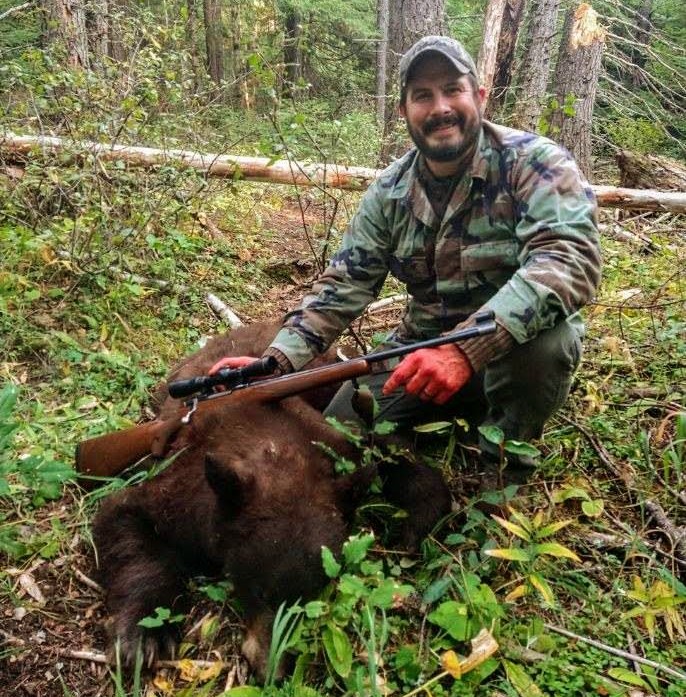
I have a couple to rifles that I think could work for this concept. The first is a bolt action Ruger M77 MKII in 308, using either a 2-7x scope or a peep sights, aftermarket trigger, and sling on it. Nice, light, and simple, it has been killing game for me the last two years with little fuss. The second is a Marlin 336, it too has a good set of peep sights and simple sling, and the barrel has been taken back to 18 1/2″. The third rifle is a AR variant, a 20″ kit from palmetto state Armory with a flattop, a Primary Arms 5x prism, back up sight, and a simple sling. There is a flashlight in a barrel clamp, so I can see the coyotes that chase my chickens, maybe not the most “tactical” but it goes on and off easily and hasn’t given me any issues yet.
None of these meet the Scout Rifle criteria but they are all practical. I doubt I would gain anything by purchasing a new rifle versus spending that money on ammunition to train with, perhaps training and some drills will verify this. I can say these three represent the most used tools in my tool box.
If I lived in a place where the terrain was more open and the likelihood of longer shots was a factor, then it is likely I might look at a faster cartridge than a 308, 30-30, or 5.56. Similarly the type of game available could dictate your selection of a cartridge.
The selection of ammunition will have a great deal to do with how well you can make one rifle perform across the spectrum of shooting tasks. Similarly to how you can take a 12 gauge shotgun and have it be a good choice for game ranging in size from squirrels to great bears. Through proper load selection you can have a rifle perform across the spectrum of game. I would give the caveat that it is easier to make a more powerful cartridge perform like a less powerful one than to get the most performance out of a weaker cartridge. A second caveat is you can have too much cartridge rather easily. Our culture promotes the concept that more is better, but there points of diminishing returns. Ultimately the performance has everything to do with bullet placement and matching bullet characteristics to game and impact velocity.
None of what I’m talking about is a new concept that I have come up with. I’m simply trying to apply it to the current world and my experiences. There are plenty of people offering their opinions on the subject still and more than a few that offer shooting courses.
So once you survey safe and you find one of two that will fit the bill, than we can start do some training with those instead of switching back and forth all the time. As you truly gain proficiency with one or two than you might find that approach more useful than trying to a have a tool for every potential hypothetical situation.
-Joe
 Outpost 95