


Does it matter what you put on a rifle for sights? For a Practical Rifle that will need to be pressed into a wide variety of roles, simpler will likely be better for you.
What are some options out there?
- Open Iron Sights
- Aperture sights – peep or ghost ring
- Low powered variable optic (LPVO)
- Mid range variable optic
- Fixed
- Red dot or a reflexive sight.
Starting with iron sights, I personally find the open sights to imprecise to be useful on a general purpose rifle. However, they do make a good choice for a backup sighting system, as they can remain attached with a conventional optic in place.

The other metallic sight, the aperture sight (peep, ghost ring) make a good choice if you know how to use them. They are precise, very reliable, small, and less affected by weather. They lack magnification which is helpful in identifying small obstructions between the target and you or which part of an animal you are actually aimed in on. They also require your eye to focus on more than one plane at a time, which isn’t as easy or as fast than focusing on only one plane at a time. I think they are under rated in modern times, but they certainly do have limitations. I hunted all last year with them and harvested game, I hunt some thicker country though.

A red dot or reflexive sight would be a good choice, especially for close to mid range distances. Everything is on the same plane making it easy to focus. They lack magnification like iron sights. I find them much handier than the scout scope. There was a time when I wrote them off because they are electronic, but a well built one is definitely worth using and nothing else can beat the speed they offer. If self-defense is the main purpose of your rifle this is a very good choice.
Magnified optics, rifle scopes come in quite a few varieties. The Scout Scope was popularized by Jeff Cooper and it is very quick. The one compliant I have heard of is they are difficult to use in low light, and that is also the compliant I have found with them. I like the idea, but if I can’t use them in low light I would rather use something else.
Another option with a lot of potential is the LPVO (low powered variable optic), they have become vogue in the tactical circles in recent years. I think it would offer a lot of flexibility, the only drawback I see with them is their bulk. They are both heavy and large, which helps them to be feature filled and offer a wide field of vision. If the extra pound or so of weight doesn’t bother you then they are tough to beat. Look through the LPVOs before you buy them as some models fish-eye, or distort, badly on the lowest power setting.
High powered scopes are a poor choice for a general purpose rifle. The ability to quickly locate close targets trumps any potential need for long range work, it is my opinion that a high powered optic only belongs on a specialty rifle. I would think a 4x minimum magnification is the max on a variable powered optic. As you are looking at options pay attention to the field of view and make certain that you aren’t limiting yourself with something having too narrow of a field of view.
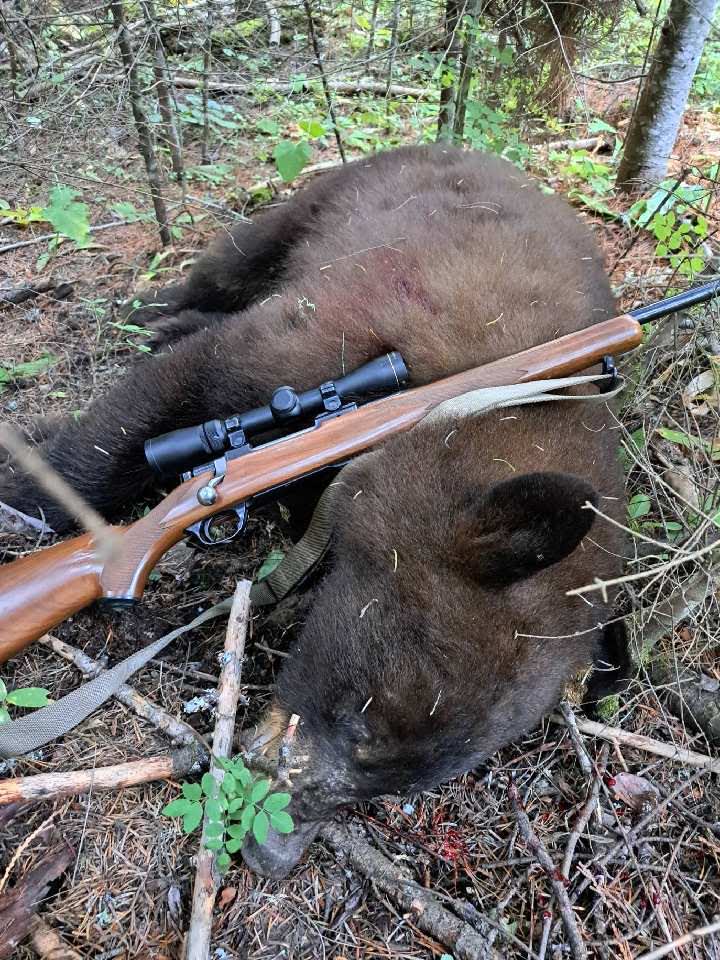
The classic 3-9x scope, or even better a 2-7x power, has plenty of top end magnification but the three or two power on the low end is enough that the optic won’t fish-eye, while still providing a large field of view in a light, compact size.
The fixed power rifle scopes are becoming a thing of the past it seems, as the manufactures perfect the process of making variables. This is unfortunate as the fixed power optics were typically lighter, cheaper, more durable, brighter, and had a larger field of view. They just are stuck on one magnification. If you can find a nice used 2.5x or 4x scope then you will find it will work quite well on a general purpose rifle.

The other kind of a magnified optic is a prism scope, like the ACOG. Primary arms has a version as well. This sort of optic is durable and compact, at the cost of heavier and stuck on one magnification. They are typically heavier, shorter, with a shorter eye relief than traditional rifle scopes, but much more robust which is why they have gained favor in with the military.
On an AR style rifle I prefer a prism optic over either the red dot or the LPVOs, all have their place and frankly if you pick one over the other I wouldn’t fault you. I spent most of my time carrying an M4 with an ACOG TA11 mounted on top. I love the style, durability, and simplicity. Putting together my full length 20″ I picked a Primary Arms Slx 5x Prism over the 3x while wishing that they had a 4x option. I may have been better served with a 3x option. I have practiced quite a bit at close range work to compensate for the fact that I hampered myself with the smaller field of view. The Primary Arms MicroPrism 3x looks very impressive on paper with a better field of view and lighter weight than the 5x I currently have on my rifle. If I were to start over and buy again that is something I would factor in.
A tool that could be pressed into service for self-defense is usually more useful if it has a forgiving field of view. What is a field of view (FOV)? It is how many feet you can see at 100 yards, as a representation of how wide of an angle you can see. Some factors influencing a FOV include: size of optic tube and lenses, magnification of optic, and distance of optic from your eye. A large optic tube with low magnification mounted close to the eye will have a large FOV, something like a low power variable optic (LPVO). While something with a smaller tube, higher magnification, and/or mounted further from the eye will have a smaller FOV, such as a scout scope or a high magnification scope. Sighting systems such as iron sights, red dots, and reflexive sights are not hampered by FOV.
| Optic | Magnification | Field Of View: Feet @ 100 Yards | Weight in Ounces |
| Leupold Freedom | 2-7x @ 2x | 43.8 | 11.1 |
| Vortex Strike Eagle | 1-8x @ 1x | 113.6 | 23.9 |
| Burris Scout Scope | 2.75x | 15 | 7 |
| Leupold FX | 4x | 25.5 | 7.5 |
| ACOG TA11 | 3.5x | 28.9 | 14 |
| Primary Arms MicroPrism | 3x | 38 | 7.95 |
As you can see the lower the magnification and the larger tube of the Vortex strike eagle offered a massive field of view, this is likely a huge contributing factor to their popularity. It is also the Vortex which is heaviest optic here at three times the weight of the lightest, the Burris Scout Scope but the Vortex has a field of view is over seven larger, so the size is bringing performance. I personally like the optics to be lighter then the Strike Eagle but offer much more of a field of view than the Scout Scope. Yes I understand that the design of the Scout Scope is supposed to make up for its limitations but I personally don’t prefer it. With a fixed 4x or a 2-7x variable in the traditional mounting location being more practical at a similar weight.
The red dots and metallic sights will not list fields of view, it is more a matter of selecting an option that balances the size of glass viewing window with the size and weight of red dot or reflexive sight of your choice. For iron sights it is a matter of picking a style that doesn’t obscure to much of your vision. I prefer a Skinner partridge front sight blade as they are slim, so I can employ them the most accurately. The rear sight is usually best if it is an aperture and a ghost ring will offer the most open viewing. Whereas a target style peep, with a small diameter opening will be more difficult to use in low light.
What about reticles? Keep it simple, after all a practical rifle is used within the rifles Maximum Point Blank Range (MPBR). I would use a two MOA dot on a red dot or reflexive sight. On a magnified optic I would keep it simple with a duplex or simple ballistic dot reticle. A Christmas tree style reticle is too cluttered for a general purpose rifle. Simple is boring, but its also more likely to work for those quick and close shots you will have.
The choice is up to you, I personally like 2-7x scopes on my bolt action rifles and prism optics on my AR, all of the rifles I have that fit the “practical rifle” definition have a good set of peep sights either as the primary sighting system or as a backup.
-Joe
 Outpost 95
Great stuff Mr B!
Sent with Proton Mail secure email.
LikeLike