Any modern incarnation of the Home Guard is going to be unsupported or, at best, minimally supported. After all, their main purpose is to provide support and assistance, not to be assisted. As this is just a concept, there is no one who could be planning to provide support to them. Today, we are going to talk about what support is and then look at some examples of it in action. This general concept applies to the prepper, the “M” crowd, modern minute men, etc.
Support is help in all of its different forms. It is something we, as Americans, are familiar with. Everyone who has a cell phone, can make a call, and get quick responses from fire, EMS, or law enforcement. When travelling, you can get a tow truck or AAA to come to your rescue. The stores still have supplies, and you can get help or resupplied for life in general for our day to day lives.
In the military, we were told it took 11 support people to keep each person in the field doing combat specific work…that is an astronomical amount of people providing support and logistics. I have wondered if being a Doc, a Hospital Corpsman, if I was counted as one of the 11 or as the one? Either way, it takes a boat load of people to keep a man in the field. The military is awesome at logistics, but at the same time, fieldcraft and self-sufficiency were lost skills during my time in.
For a group trying to be a Home Guard without outside help, here is a brief list of logistical hurtles in front of you:
- A training cadre.
- The intelligence required to make themselves useful.
- A means of communicating among themselves, the community it is supporting, and other communities in the area.
- Equipment and resupply.
- Medical in the field.
- Evacuation and follow on medical care.
- Food
- Water
- Hygiene and repair
- Competent people to make it all work.
What does this mean in a planning, training, and operating paradigm? Like we said, this is much different than any of the veterans you know are accustomed to working in. There, the system was set up. Logistics were always covered. A specialist was a radio call away.
The biggest difference I can see immediately is the difficulty you have in keeping a group fed and watered. This is followed by sanitation, which has been the biggest medical danger and killer historically. Who is coming to work on the wounded and going to transport them to an area where they can receive help, time, and a safe place to heal? Self-sufficiency among individual members and group as a whole are going to have a premium placed one them.
If the people coming to “help” can not take care of their own needs, they may become a bigger problem than they are worth. Don’t discount this either, I have spent many man hours rescuing the would-be rescuers. Their heart was in the right place, but their physical ability got them in over their heads and created more work for everyone else.
A problem with self-sufficient independent people is that they are much more difficult to lead. They will solve problems all day long, but they will be a handful and are less likely to be a team player. This is likely why the military discouraged independent thinking. The mountain team I was with in the Border Patrol encouraged independent thought, and the selection process was designed to find problem solvers from an organization mostly filled with independent people, but it also focused on finding people who would work on a team, together as a team.
This independent nature provided insight into the unsupported question. While we were still part of a large organization with support, we as a small team took care of many of our own logistical, intelligence, training, operational, medical, and planning functions. Everyone on the team had collateral duties in one or more of these areas.
The current iteration of the Canadian Rangers to our north, the best I can tell from my research, are a very self-reliant group being minimally equipped when they can perform their work. They are considered trained on induction. Often provided their own vehicles and other equipment. This can have some advantages such as not being overwhelmed with too much stuff, making them more reliant on skills. However, it also means they are not standardized in their training and ability.
Which is a complaint leveled against them. Without a standard it is hard to have an honest expectation. Their lack of tactical training in recent years is another compliant, that they are a toothless tiger. If this is true, that could be a result of the execution of the idea rather than the idea itself. Also, they are a part-time, volunteer force, and they will not have the time a full-time force does. Time should equate to proficiency.
They are likely not going to have anyone outside of their group that could provide them assistance in any timely fashion, illustrating the importance of having a good team and communication with them.
They also benefit from the recruitment of individuals who can survive and thrive in rural areas they patrol, they are versed in procuring food, making shelters, and planning movement on an individual level. The more time living the life, the more experience is gained.
The Australians have a group very similar called NORFORCE operating in its North West Territory, these also being surveillance and reconnaissance forces in nature, recruiting locals familiar with the area.
These skills matched with my experience in the Border Patrol, those skills of a scout are the ones most useful to maintaining an awareness of the threats coming into a country or a region specifically the rural areas. They are much more self sufficient and able to operate with minimal or no support. Their independence further driving down the logistical requirements. Meaning if you are more capable, then you need less crap to function.
Just some things to consider, I notice many out there are fantasying about how it could be in a potential future conflict. With the conflict on the other half of the world continuing with no end in sight, I understand how this fantasy occurs. Hopefully, those conflicts get resolved as peacefully as possible and don’t spill into further conflict. In the meantime, it certainly doesn’t hurt to start making ready to provide assistance should the day come where it is needed. Building community, self-sufficiency, and scouting & ranging skills seem the most logical way, based on personal experience and the historical examples. And if nothing, hopefully, ever happens, then you got to spend time with the community spending some time in the woods….not so bad of a thing.
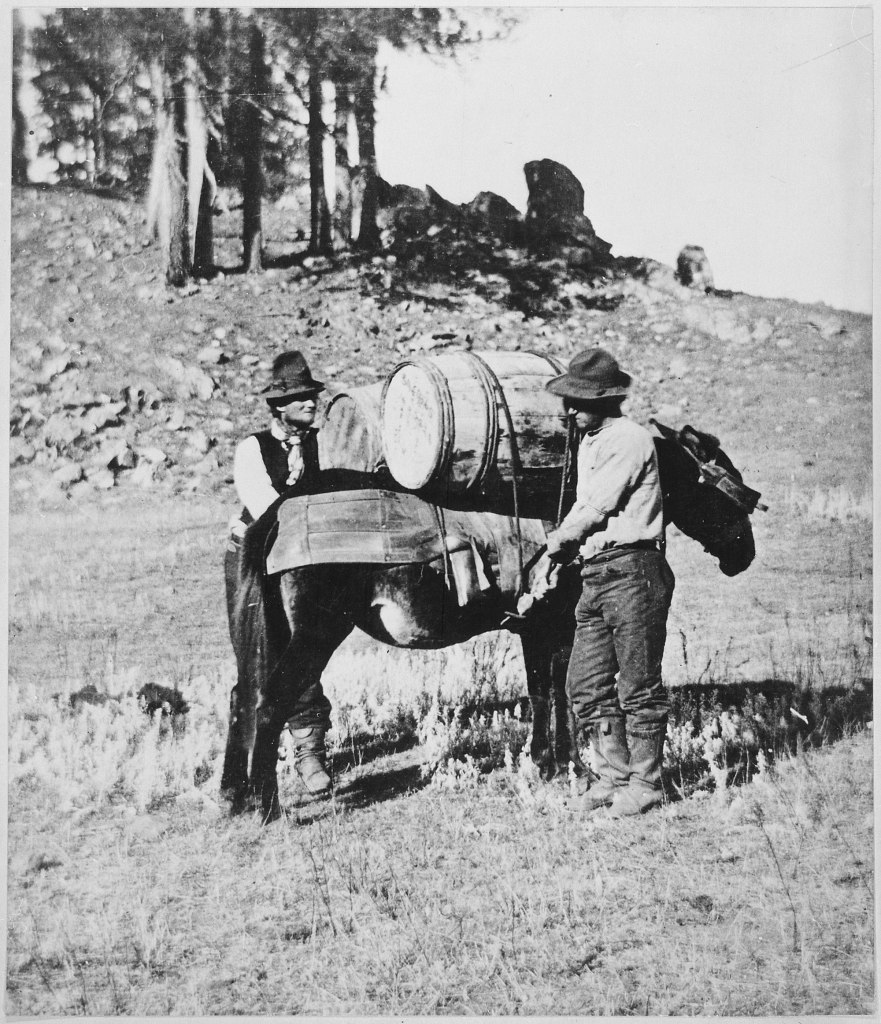
Ultimately the only answer to a lack of support, is through a well trained team versed in a larger cross section of skills, look to the explorers, fur trappers, and traders of the 1700 and 1800s for inspiration. Remember George Washington over wintering in Valley Forge and the losses that resulted from the conditions and the lack of support.
How prepared are you and your house? What skills do you have? Or think you have, but haven’t tested thoroughly? What will give you the most bang for your dollar and time? Not what is the most sexy, cool guy thing. If you can do a mag dump on the flat range in record time, but can’t change a flat tire or avoid an unnecessary fight. Then you have a problem.
Community, skills, and Jesus are the answers to most questions here especially.
-Joe
NOTE: I wrote this article over a year ago, and i was not certain if it was worth the potential fear mongering. Conflict in the world has only increased, and it seems the fear of World War III is prime time worthy now. So I guess I wasted that year when we could have been better preparing ourselves.
 Outpost 95