

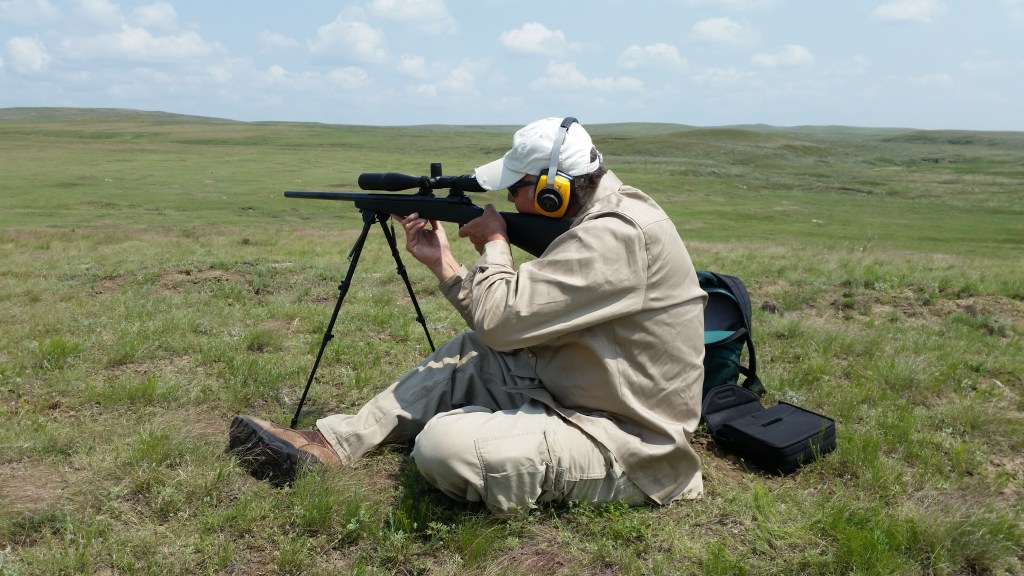
The art of the rifle was a basic skill set for any scout, hunter, and frankly many Americans prior to WWII. Adapt use of the rifle certainly seems like the original American martial art and for good cause, as it was both useful in peace and wartime.
In past times and other countries archers were a prized part of a culture and an army, for their ability cover an enemy at bay. They were also prized because it typically took a lifetime of practice for a competent archer to be made. While this level of training isn’t as intense as it was for the archers of old, a life time of mastery with a rifle is difficult to replace. Especially quickly and on mass scale.
Japanese WWII Admiral Yammamoto was quoted said “You cannot invade the mainland United States. There would be a rifle behind every blade of grass.” While evidence suggests this is more likely a movie quote, it does resonant with the independent streak America possesses.
Simple having a rifle in hand is not what made an American so formidable during 1770s or 1940s, rather it was a combination of rifle in hand coupled with training and experience to use it to the fullest potential. If you are accustomed to solving a problem with a checkbook, the answer isn’t going to be more rifles, nor the latest fancy gizmo or widget. Rather more training and more ammunition to practice with. Get some training in the basics and practice, practice, practice those things. Once the basics are mastered then add more advanced techniques: field shooting, external and terminal ballistics, moving targets, etc. Move on to evaluating how this techniques actually work for you, in your actual and potential future needs.
I was blessed to grow up with a bb gun and 22 rifle as ever present companions, my brothers and I shot constantly as kids and this improved our skills profoundly. Helping in the hunting fields and later in our professional lives.
Once I became a Hospital Corpsman and got to my first duty station I got blessed with having the Marine Corps letting train with the M16A2. The first week of this was spent in dry practice with no ammunition, which is an extremely effective manner of beginning training. I’ve heard it said you should dry fire five times at a minimum for every live round that you fire, but no matter how you look at it you should return to often. This dry fire lays the ground work, as it is fundamental in the mastery of the basics.
A problem many of us have when learning something, is the desire to chase the shiny things. Wanting to start with an advanced technique without building the muscle memory through the 100s or 1000s of repetitions of the basic level tasks which give you the baseline to perform those advanced techniques, this is where all of that dry fire practice comes back into play. I know this is a hard sell for most people, it takes time and work.
Currently my boy is interested in learning how to hunt, shoot, and do all the things. I know that I myself am do for a refresher as well. So perhaps it is time we put ourselves through the steps to master and maintain proficiency. Starting with the basics and working up through to advanced rifleman skills in field conditions.
At the end of the day which would you rather be? A man with a rifle or a rifleman?
-Joe
 Outpost 95